Overview This plugin allow you to change the max players on your server without changing the server.properties or restart your server. Unlike others similar plugin wich simulate to change the slots but only allow you to join when the server is full, this plugin will directly change slot into Bukkit or BungeeCord, so commands like /list on Bukkit will show the new number of max players. Author and casino expert Steve Bourie takes a look at various types of slot machines and discusses when it is best to bet maximum coins on them. The change in the process of delivery and shipment servicing has enabled the implementation of systematics and distribute the warehouse workload accordingly to its capacity. What is the best time to commence the implementation? There is only one correct answer to this question – the faster, the better.
- When To Switch Slot Machines Jackpots
- When To Switch Slot Machines Machine
- When To Switch Slot Machines Invented
- When To Switch Slot Machines Without
- When To Switch Slot Machines For Sale
Introduction to Controls Slot Machine Odds
Who controls slot machine odds is a popular question from slots enthusiasts. It’s quite an interesting question, which I thought my audience would appreciate an answer to.
My most recent encounter with this general question was during the Q&A segment of another gambling podcast, episode #634 from Five Hundy By Midnight. They had a question from David which was, “When a new themed penny slot debuts, what is the typical hold percentage? Does it vary by machine, casino, or both?”
Tim and Michelle, co-hosts of the long-lasting Five Hundy By Midnight, a gambling podcast that’s all about Las Vegas, answered the question well, if somewhat briefly.
I’m sure my own audience would like the answer too, so I’m providing a few more details as well as a more general answer with a bit of the why of it all.
This segment has the following sections:
- Introduction
- A Bit of Background on Legal Requirements
- A Bit of History on Physically Setting Odds
- Slot Machine Types Based on How Odds are Set
- Identifying Who Controls Slot Machine Odds
- Does It Really Matter Who Controls Slot Machine Odds? Yes!!
- Summary
Keep Reading … or Watch Instead!
Or … Listen Instead!
Subscribe to my Professor Slots podcast at Apple Podcasts | Google Podcasts | Spotify | Amazon Music | Amazon Audible | Gaana | Stitcher | Pandora | iHeart Radio | Tune-In | SoundCloud | RadioPublic | Deezer | RSS and everywhere else you find your podcasts!
A Bit of Background on Legal Requirements
To answer this question, I’ll need to delve into a bit of recent history to explain how odds are set in older-style standalone slot machines using a random number generator (RNG). This way is how many people incorrectly believe the odds are currently set on ALL slot machines.
However, starting around 2008, a lot changed with setting slot machine odds. These changes are due to the emergence of new gaming technologies, not only in slot machines but also with the development of casino operating software. Both provide casinos with an increased operating efficiency and therefore low operating costs.
With so many more people visiting casinos in the last decade, and with their profit margins getting smaller every year, casino operators find they cannot afford to ignore the savings opportunities of new technologies.
The second driver for this change to how slot machines are controlled is due to ongoing developments in statutory regulations for gaming jurisdictions. In the U.S., these gaming jurisdictions are the states, territories, or federal district that legally allow gaming.
In essence, casino operators have to follow the gaming regulations for the jurisdiction wherein they are located. In part, these gaming jurisdictions often include laws which place an upper and lower limit on the pay back return for slot machines.
To not lose their gaming license, or to otherwise get in trouble with gaming control authorities, casino operators must remain in compliance with these legal gaming requirements.
Note that commercial casinos have to be comply to gaming regulations as set by the U.S. state, territory, or federal district they are located in. Native American tribal casinos also have to comply with their own set of gaming requirements, which are usually not based on state law.
Rather, these are defined by negotiation between a federally-recognized tribe and the state within which they are located by carefully crafting a state-tribal compact ultimately approved by the U.S. Department of the Interior.
So, within this overall context, who controls slot machine odds? At a high level, gaming regulators determine the legal limits, if any, for payout returns on slot machines. This is accomplished via state law or negotiated compacts, and usually not changed for a decade, if that often.
Casinos operators are, often but not always, required to provide weekly or monthly reports on actual payout returns to show their gaming authority they are compliant. Sometimes, depending on each gaming jurisdiction, these statistical reports are then provided to the public by the state gaming commission.
Going further, these regular reports can break down these actual payout returns by casino, table games, slot machines, gaming machines, by the denomination of slot machines within a specific casino, or even if the machine has a progressive jackpot. What is done is very specific to the gaming jurisdiction where the casino is located.
Given all these variability of what is or is not done within a U.S. gaming jurisdiction, I’ve created an online series of posts for my audience of slots enthusiasts. It’s meant to help them navigate this dynamic environment of state-specific gaming regulations.
For more information on your specific state, territory, or federal district of interest, see Slot Machine Casino Gambling, State-By-State: A Weekly Blog.
So, at its high level, slot machines are controlled by gaming regulators by the placement of legal requirements for payout return percentages. Sometimes, however, these state-specific gaming regulators do not set limits on payout returns. Put another way, they have deliberately chosen to not set legal limits.
When this happens, somewhat obviously, casino operators do not have a legal requirement for setting payout returns. However, to remain open and not close due to lack of customers, they still have to be careful to not set their payout returns too low.
It’s worth noting that most gaming regulations set a low limit on payout returns to which casino operators deliberately stay well above. To do so is just good business.
A Bit of History on Physically Setting Odds
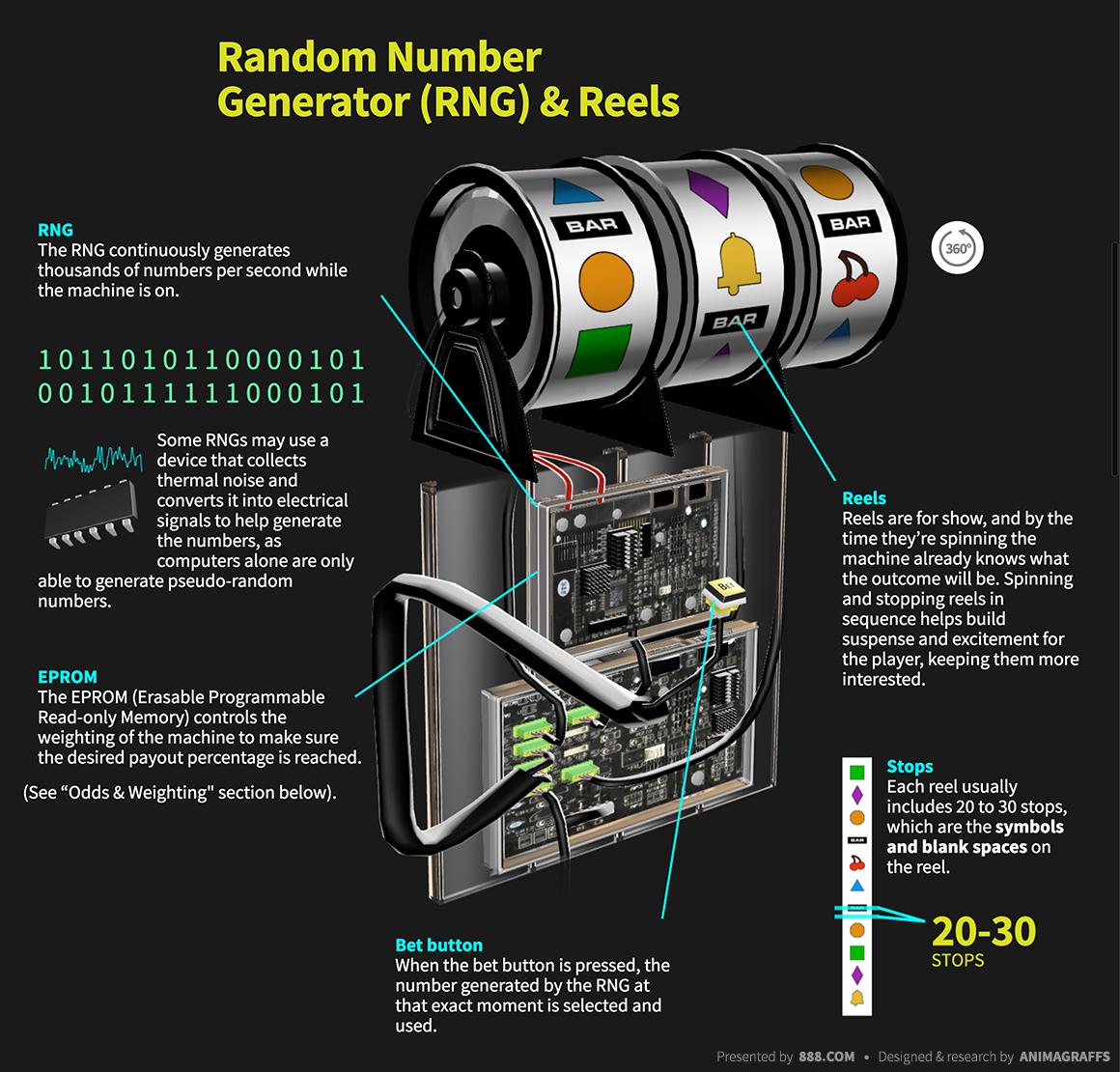
The random number generator (RNG) was developed for slot machines by Bally Technologies in 1984. About a decade later, most slot machines had this RNG, which allowed for easily adjustable odds of winning.
Beforehand, the odds of winning were set in an entirely mechanical manner. This worked well for decades, until the technical development of slot machines began to cause difficulties. Basically, as credits to bet and number of pay lines increased, the physical mechanisms for determining odds began to reach certain physical limits.
Slot enthusiasts loved having a choice of how many credits to bet, as well as playing a slot machine with more than one pay line. Increased credits and pay lines also led to much higher jackpots.
All of these developments led to odds of winning being needed for many more possible outcomes, which mechanical devices for determining the odds of winning began to not be able to handle. In fact, these mechanical devices began to fall behind and actually became less and less random in nature.
As an aside, the topic of randomness is actually quite interesting. True randomness is very difficult, if not literally impossible, to generate. Often, when randomness is needed in either an mechanical or electronic device, various methods are used which are “random enough.”
Technically speaking, there is no such thing as an existing perfectly random number generator. At best, there are only pseudo random number generators, one variant of which was patented by Bally Technologies in 1984.
Moving away from our brief sortie into the philosophy of randomness, the invention of the RNG solved for slot machine manufacturers this limitation of mechanical devices for determining randomness in slot machines. But, it created another problem: With adjustable odds of winning via electronic RNGs, casinos would need to have a large workforce to do that adjusting.
And so, that is what casinos did. They built and trained a workforce of slot mechanics to adjust the odds of winning on their new slot machines to meet their desired performance metrics.
However, the size of that workforce would increase tremendously depending on how often those odds of winning were adjusted. For older style slot machines, this is at least 7 days and may be as much as 2 weeks, as I’ve expressed in Professor Slots Episode #21: Winning at Slots on Older Casinos-Kentucky Slots 2018.
Most recently, since 2012 or so, relatively newer casinos have been able to reduce this costly workforce thanks to new casino operating systems. These systems not only help casinos manage large promotional events with less overall issues, but also allow them to remotely adjust the odds of winning on slot machines connected to the casino’s central computer system.
Of course, this connection to the casino’s central computer system is currently limited to a wired connection due to potential security concerns as well as WIFI bandwidth limits. As a result, using a central computer in this manner is only possible if all the slot machines are physically “wired up.”
Doing so requires sufficient building infrastructure, such as clearance beneath floors and behind walls, to allow for these many, many cable connections. This is only practically possible in all new casinos being built as well as older casinos being heavily renovated. That is to say, renovated to have far more than simply new carpeting and wallpaper.
With wired connections from slot machines to a central computer, the reduced cost of a smaller workforce of slot mechanics, much faster adjustment of casino performance metrics to daily or even hourly updates, and more satisfied customers due to efficiently run events, the question remains. Who controls slot machine odds?
To get closer to the answer to this question, we’ll next have to discuss how the legal limits of payout returns are set on actual slot machines. Why? Because slot machines can be categorized by how their odds are set. And, how those odds are physically set will tell us who really controls them.
Slot Machine Types Based on How Odds are Set
Slot machines can be divided up into methods by which their odds of winning are set. These slot machine types include:
- Standalone
- Casino-Specific Progressives
- Multi-Casino Progressives
- State-Wide Progressives
- Remotely Controlled Onsite by Casino
- Remotely Controlled Offsite by Gaming Regulators
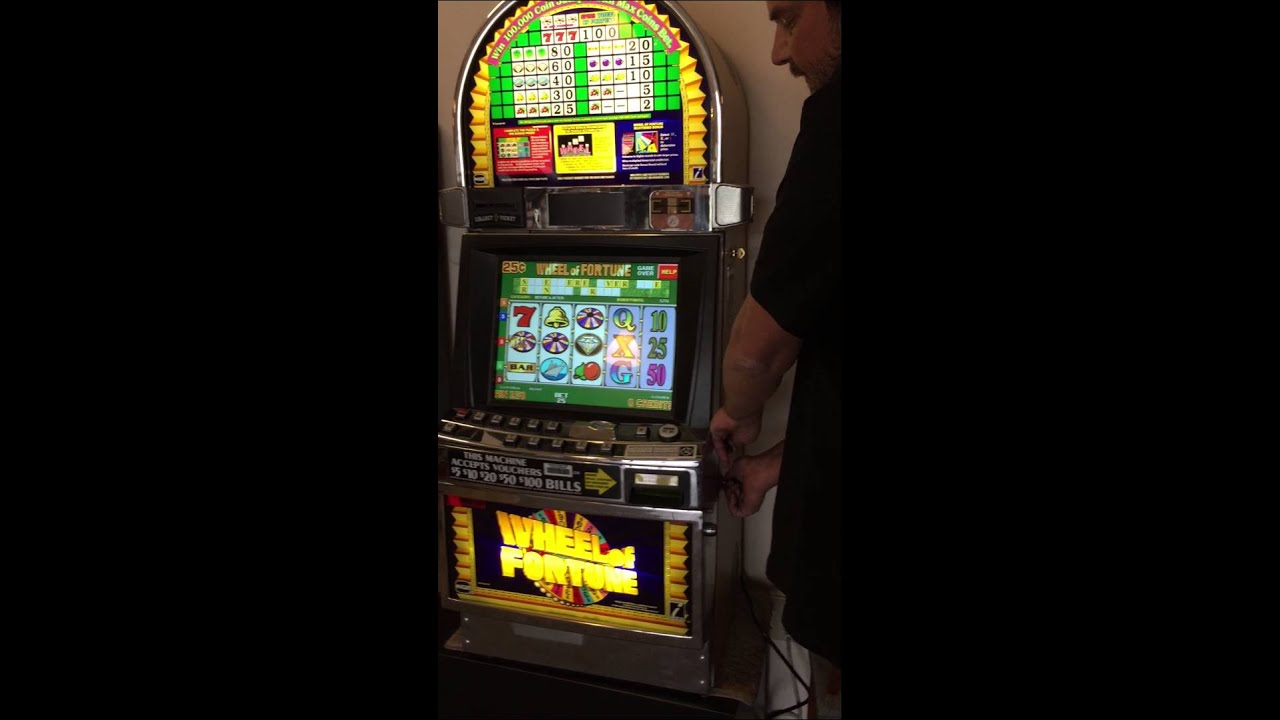
Standalone slot machines are those which are most often found in older casinos, but are technically slot machines including within their cabinets the ability to set and provide odds of winning with a random number generator. A workforce of slot mechanics adjust the odds of winning periodically as directed by the casino operator.
In general, there is a limited number of settings available for these older slot machines. YouTube videos are available from individuals who have personally purchased an older style, standalone slot machine showing exactly how these odds are set.
For those videos I have viewed, there were six possible settings which could be entered after opening up the slot machine door. These settings were based on codes from a booklet provided by the slot machine manufacturer.
Keep in mind that videos such as these are the general source of knowledge most people have about the internal workings of slot machines. Employees of slot machine manufacturers and casinos with access to these payout settings simply aren’t sharing this information due to non-disclosure agreements and other legal restrictions.
Besides which, accessing the control for changing the odds of a slot machine is quite problematic. The slot machine is alarmed, so any tampering without official access (employee card key, entry code, physical key) are required to even open a slot machine door. Not to mention, the casino surveillance system sees all.
Discussing the three types of Progressive Slot Machines mentioned will be the dedicated topic for another time. I’d discuss how the ownership of these Progressive slot machines matters with regards to how the odds of winning are set. Briefly, the amount of the Progressive jackpot is primarily based on how many slot machines are included.
For instance, these can be a carousel of slot machines in a certain area of a casino, it can be a larger number of slot machines located throughout a casino, or a large group of Progressive slot machines located at multiple casinos.
These large group could actually be of two types: multiple properties of the same casino operator, or multiple casino operators, within a single gaming jurisdiction, i.e., state.
Already discussed are slot machines remotely controlled onsite at a casino through the use of a central computer operating system. Only new or heavily renovated casinos have the facility infrastructure to handle the sheer number of cables necessary.
If they are controlled onsite, these slot machines have their odds of winning adjusted daily or hourly by remote access. How often these adjustments are made is, rather unfortunately at this time, a matter of debate.
I’m currently trying to track down state legal requirements of which I’d heard rumors. The rumor I heard was that a slot machine must be idle for at least 15 minutes without a players card being inserted before the casino is allowed, if desired, to remotely adjust its odds of winning. Further, the rumor stated that this practice was typical and originally based on Nevada gaming regulations.
However, this rumor doesn’t pass the so-called smell test. At this time, I’ve currently reviewed state gaming regulations for over 38 U.S. states, territories, or a federal district. I’ve yet to find any substantiation for this rumor. Alternatively, it may well be an accepted business practice built-in to the advanced casino operating systems.
Why do I feel strongly that slots players are protected from having their odds of winnings reduced while playing? It’s simple – the state control board controls the odds of winning on slot machines, and everything I’ve seen, read, and studied tells me they work for you.
I just can’t imagine state gaming commissions would allow something this untoward, this nefarious even, to occur. They have careful casino operating system approval processes in place to prevent it, they watch casino operations like hawks (often from within the casino), and any casino that decides not to be fully compliant is in for a world of hurt if/when caught.
Finally, there are slot machines having their odds controlled off-site by state gaming regulators. These are most or all video lottery terminals style slot machines.
Video lottery terminals are, as their name implies, instant lottery machines. That means they are controlled by the state lottery, which is set up to remotely handle many, many such terminals at any given moment.
Identifying Who Controls Slot Machine Odds
Who controls slot machine odds at a casino you are considering whether or not to visit? Who controls slot machine odds on the slot machine you’re sitting at?
As I’ve discussed before, both on my webpage Assessing Casinos as well as Professor Slots podcast episode #3: Assessing Casinos, Alaska Slots 2017, deciding which local casino you want to spend your time at is an important decision for determining your baseline success at slots.
So, you’ll likely want to know who controls slot machine odds when you’re choosing between, for instance, an older, pre-2012 casino with standalone slot machines or a racino with many new video slot machines.
The top level choice is really about your own gambling goals, as also discussed on my webpage Identifying Gambling Goals or, alternatively, within Professor Slots podcast episode #5: Identifying Gambling Goals, Arizona Slots 2017.
But, whether your gambling goal is entertainment, earning maximum comps, or take-home money, having better odds of winning on a slot machine will help accomplish that goal. So, ignoring other important considerations such as drive time, the spread of the buffet, players club, and etc., the type of slot machine is definitely a consideration.
Casinos with standalone slot machines where the actual machine in front of you has its own dedicated random number generator is relatively easily determined. Ask someone, how old is the casino?
Or, if you don’t want to ask someone or look it up online, just take a look at the slot machine in front of you. Specifically, look at the player card interface area. What does its display look like? Is it a touchscreen display?
Or an LED display like those seen outside of a bank showing the time and temperature for a passerby to see? If it’s a touchscreen, the slot machine is most likely not standalone. If it’s an LED, it most likely is a standalone slot machine.
Determining whether or not a Progressive slot machine is connected to a single carousel, across several carousels within a casino, across several casinos owned by a single casino operator, or across several casino operator properties will be, as previously mentioned, the topic of an upcoming post.
Next up are non-video slot machines with touchscreens at the players card interface. These are all slot machines centrally controlled by a computer onsite at the casino. You can confirm this by learning the date of the casino’s original opening or when it was last heavily renovated.
Keep in mind that a very few casinos have both, assuming they have expanded their original structure not by renovating it, but by building a new casino facility right next to it.
This is the case with Foxwoods Resort, which is itself an older style casino. However, they recently build Fox Tower right next to it, which is a newer style casino.
Finally, there are video slot machines. It can be difficult, if not impossible, to tell the difference between a video slot machine and a video lottery terminal. A video slot machine is controlled onsite by the central computer at the casino. A video lottery terminal is controlled offsite by the state lottery.
The only sure way to tell the difference between these two slot machine types is to take a look at what the state gaming commission says they are at that casino.
For instance, in Ohio, there are currently 4 commercial casino resorts and 7 pari-mutual racinos. The 4 casinos have traditional reel and video slot machines all controlled by a central computer located onsite.
However, Ohio’s seven racinos have a mix of traditional reel and video lottery terminals slot machines. The traditional reel slot machines are controlled onsite with a central computer while all of the video lottery terminals, which externally look exactly like video slot machines, are controlled offsite by the state lottery’s central computer systems.
Does It Really Matter Who Controls Slot Machine Odds? Yes!!
With this improved understanding of how casinos work, let’s consider these two facts. First, that there are types of slot machines, specifically those that are standalone or remotely controlled by casino operator or state. Second, that there are the several ways slot machines can have their odds of winning set on an ongoing basis, depending on their specific type.
So yes, actually, it does matter who controls slot machine odds. Why? Because this is where patterns of winning are found. When slot machines are set up to be as random as possible, and that assigned level of randomness is unchanged over days and weeks, then long-term statistical principles rule.
Meaning, on average over the long haul, people will always loss money playing slots. Put another way, profits are only possible in the short term.. This specifically applies to all slot machines controlled by the state, such as video lottery terminals.
However, when the odds are changed hourly or set over 100% for promotional purposes, then there are better times to play a slot machine – and all that slot enthusiasts need do is figure out when that better time is in order to win more and, potentially, make some level of profit. That’s what I did: I made a profit at slots by looking for and finding winning patterns, when I won 90 taxable jackpots in 9 months.
Only casino operators change their odds hourly or deliberately adjust them for promotional purposes. The state has no need or desire to do so, getting their money no matter what, while the casino is a business, with stockholders and a board of directors, obligated to try to succeed financially.
The casino puts in the time and energy to hit their financial performance metrics. The casinos hire the best general manager who themselves hire the best possible team.
Put another way, the casino has a business need to adjust the odds of winning on their slot machines to eke out a living while the state only needs to be patient. Businesses are not patient – they try things in their ongoing quest for success.
And, really, that struggle is what has changed since around 2012 with the technology behind the winning odds of slot machines. Casinos are always trying new things. And, when they have control over setting the odds on slot machines, they adjust them to try to succeed.
Before 2012, this amounted to increasing the odds of winning to be over 100% on a single slot machine near a busy area in their casino, as a promotional tool with its own limited budget.
With the new casino operating technologies, casinos have been given a finer control over setting those odds. This has allowed them to try new things, which they very much like to do. These new things are to adjust the odds on slot machines more often than ever before.
In financial terms, they’re trying to tune their financial performance metrics on a daily or even hourly basis, something that was never before possible.
I’ve never worked for a casino, so have never been pitched a new casino operating system by a slot machine manufacturer’s sales team. But, it’s obvious that this “tuning” is part of the pitch being made to casino operators. Without having seen it, how can I believe this? Simple. I’ve won a lot at slots through pattern recognition.
What’s happened is that, and it matters not at all how it came about, casinos have obviously bought into the idea of finely tuning their financial performance metrics.
In the case of slot machines, which is the only game as casino offers that I’m interested in, they’ve broken the long-term constant randomness of the odds of winning on a slot machine. Therefore, as all statisticians know, patterns emerge.
So, again, yes it does matter who controls slot machine odds, because those controlled by the casino have had their randomness broken. It matters because slots enthusiasts can look for emerging patterns on these casino-controlled machines, then use them to win more.
In the future, I’ll talk more about the winning patterns I’ve found using this understanding. In the meantime, I hope I’ve made it clear how and why they exist.
Summary of Can You Guess Who Controls Slot Machine Odds?
In summary, who controls slot machine odds is answered by understanding they are controlled by the machine, the casino staff, both, possibly the state if the machine is a video lottery terminal, and by slot machine manufacturers themselves in the case of most Progressive slot machines.
This control over the odds of winning was historically a mechanical device supplanted by an electronic random number generator invented in 1984, afterwards allowing slots machines to be developed having more credits, denominations, and pay lines as well as higher jackpots.
There’s currently older-style casinos with standalone slot machines and newer-style casinos built to have the facility infrastructure necessary for physically wiring up their slot machines to be remotely controlled by a computer server.
I’ve discussed how to tell the difference, as well as explained how slot machines can be remotely controlled by the casino or, in the case of video lottery terminals, by computers established for this purpose by the state lottery agency.
Finally, I’ve discussed if any of this matters to slots enthusiasts looking for an advantage. It does matter. In essence, any slot machines with odds of winning directly controlled by a casino have patterns of winning because casinos keep adjusting those odds to meet their financial performance metrics.
These patterns make it possible for savvy slots enthusiasts to improve their own gambling performance.
Related Articles from Professor Slots
Other Articles from Professor Slots
- Previous: How to Win at Slots in Older Casinos Built Before 2012
- Next: Slots Winning Strategy 1: Only Win Immediately
Have fun, be safe, and make good choices!
By Jon H. Friedl, Jr. Ph.D., President
Jon Friedl, LLC
Slot machines remain a mystery to many gamblers because you can’t see their inner workings. This differs from casino games like blackjack or roulette, where you can physically see how results are determined.
This has led to may slots myths, such as casinos flipping switches to change payback or machines running hot and cold.
The truth is that slot machines, and their results aren’t difficult to comprehend when you look closer at the matter.
Below you can see 10 important points on slot machines that will clear up many misconceptions. You’ll also see other info on the biggest slots jackpots, skill-based bonus rounds, and slots history.
1. Slot Machine Results Are Determined by Random Number Generators
One of the most important things to know about slot machines is how results are determined.
These games used to work on mechanical reels and levers. But now, almost every game is a video or online slot machine that features a random number generator (RNG).
The RNG cycles through sequences of simulated random numbers. Oftentimes the RNG moves at the rate of thousands of number sequences per second.
When you select the spin button, the most recent number combination determines your result. This means that the biggest determinant in your result is when you choose to spin.
Some players believe that they can produce desired results by “timing up” spins correctly.
This might be true if slot machines had more predictable RNGs. But given the speed at which RNGs move and how they continue working even when not played, timing up spins is impossible.
In summary, slots results are totally random. And you can’t do anything beyond developing an elaborate cheating plot to win guaranteed profits.
2. Slots Payback Determines Your Chances of Winning
Your odds of winning with a slot machine are determined by the payout percentage (a.k.a. payback).
Also called, return to player (RTP), this figure represents how much money you’ll theoretically win back from your bets. A slot machine with 95% payback would return $0.95 on every dollar you wager.
Many land-based casino jurisdictions require a minimum slot RTP. New Jersey requires a minimum payback of 83%, Mississippi requires 80%, and Nevada calls for at least 75%.
Most brick and mortar casinos have higher average RTP than the state required minimum because they want players to feel like they have a chance to win.
ThoughtCo reports that the average payback on Nevada penny slot machines is 90%, which is low in comparison to other types of slots in the state. But it’s also far higher than the state requirement of 75%.
Modern online slots payback between 95% and 97%. Online slots don’t have the same overhead costs as casinos, so they typically offer higher payback.
Obviously, you want a game’s RTP to be as high as possible. But the problem is that most casinos don’t advertise RTP on all of their slots.
This means that you’ll have to do research to find slots payback in many casinos.
This is easy to do with online slots providers because they usually offer a uniform payback across all of the casinos they serve. For example, NetEnt’s Blood Suckers slot has 98.0% payback at every online casino where it’s offered.
Land-based slot machine RTPs are harder to come by because they vary from casino to casino. But you can often find a composite RTP figure by researching individual casinos and games.
3. Casinos Can’t Change Slots Payback Whenever They Want
Slots payback is tricky because it’s programmed to pay out over a long time period. Payout percentages may not actualize until hundreds of thousands of spins.
If you’ve played a specific slot for this long, then you’ll be close to the game’s specified payout percentage.
But most players don’t realize how long it takes to reach a slot machine’s RTP. And they often think that they’re being taken advantage of when they go through a cold streak.
This has led to the myth that casinos use a back office switch to change payback. But this isn’t the case in either land-based or online casinos.
Brick and mortar casinos order slot machines with a specific RTP. The game developer then programs the payout percentage into the software and stores it on a nonvolatile random access memory (NVRAM).
If a land-based casino wants to change payback for a specific slot machine, they must physically swap out the software. State/country gaming jurisdictions also require that casinos go through red tape before they change RTP on any game.
This means that it’s both time-consuming and illegal to randomly switch a slot machine’s payback whenever one feels like it.
Online slots providers control the payback that games have. Internet casinos license their software and feature whatever RTP is available.
This prevents tampering because the online casinos are merely licensing slots games.
Many gaming providers pay for third-party lab testing to ensure that their games are fair and random.
4. Slot Machines Have Fun Bonus Rounds
In 1996, WMS Industries created the first, second-screen bonus round in Reel ‘Em slot. Ever since then, slots creators have been adding more and more second-screen bonuses to games.
This creates excitement because you move off the reels and into a different type of game. What’s also fun is that you’ll find plenty of different bonuses across the slots world.
Bonus rounds usually have something to do with a slot machine’s theme. For example, Random Logic’s Millionaire Genie slot has a bonus round where you’re granted wishes that can turn into prizes.
Most bonus rounds fall into a broad range of categories, which you can see below:
- Choosing objects – This involves selecting items such as pots to reveal prizes.
- Fight – Select a character to battle an opponent.
- First person shooter – Allows you to move a cursor and shoot objects.
- Wheel – You spin a wheel to determine your prize.
- Board game – Move your character around a board to win bonus payouts.
None of these types of bonuses reinvent the wheel in gaming. But it’s still fun to trigger a bonus and do something different beyond spinning the reels when you get a chance.
5. Some Slot Machines Contain Skill
Slots players have been satisfied with spinning reels and winning prizes for decades. But casinos and gaming operators are now incorporating more skill into slot machines in an effort to capture younger players’ attention.
One way this is done is through skill-based bonus rounds. Let’s look at Scientific Games’ Space Invaders as an example:
- You have the option to choose a random or skill based bonus round.
- The skill based bonus takes you to a new screen, where you control a tiny ship at the bottom.
- You move the ship and shoot aliens as they travel down the screen.
- Your score (payout) depends upon how many aliens you hit.
Space Invaders is an old arcade game that’s been around since 1978. And most people would never play this game alone.
But it’s fun in the context of a slot machine because you’re doing something different and playing for real money.
Some companies are even developing gaming machines that are entirely based on skill. This includes GameCo’s Danger Arena, which is a first-person shooter that sees you blast robots for money.
Your score depends upon how many robots you can shoot within the allotted time frame. You earn the top prize if you’re able to destroy 10 bots and get a perfect score.
It remains unclear when skill-based gaming will take off in casinos. But the odds are that it’ll happen at some point within the next decade.
6. Class II Slot Machines Operate Like Bingo
Earlier I covered how slots operate based on random number generators. These are referred to as “Class III” slots in America.
But there are also Class II slot machines, which operate like bingo games.
These slots are popular in tribal casinos that don’t have a Class III gaming compact with their respective state. Many states have worked out Class II compacts with Native American tribes, allowing them to offer bingo style gaming.
A Class II machine looks just like a regular slot. But the results are determined as if you were playing electronic bingo.
What’s interesting is that the available number of prizes is capped to represent a real life bingo game. Once all of the prizes have been paid, the cycle starts over.
Essentially, Class II slots are just like the Class III versions in terms of randomness, payback, and jackpots. But they determine results differently to allow tribal casinos to still have slots like games.
7. The Largest Ever Slots Jackpot is Worth $39.7 Million
One really exciting thing about slot machines is that you can win huge jackpots. And the biggest ever jackpot is a $39.7 million prize that was won at Las Vegas’ Excalibur casino.
A 25-year-old software engineer from LA won this slots jackpot in 2003 while playing Megabucks. He put in $100 and never had to reload because he won the jackpot shortly after that.
Behar Merlaku thought he’d won a record $57 million at Austria’s Casino Bregenz in 2011. But it turned out to be a software glitch because the machine only offered a top payout of $6,500.
Merlaku took the matter to court and said that both he and his wife suffered emotional stress as a result of the malfunction. He also contended that his child was born with a cleft palate due to his wife’s trauma.
The couple was awarded €1 million as part of a settlement.
The largest online slots jackpot in history belongs to Jon Heywood, who won £13,213,838 in 2015.
The British soldier, who did tours in Afghanistan, was playing Microgaming’s Mega Moolah at the time of his win.
When To Switch Slot Machines Jackpots
Heywood spoke with the Daily Mail about his windfall and said that he was going to help his father get a heart and lung transplant. He also planned to buy a yellow Bentley Continental GT car and decide what to do with the rest later.
8. Slots Jackpots Can Be Awarded In a Variety of Ways
Many slot machines have a specific symbol combination that awards a jackpot. Normally this involves getting the highest paying icon or wild symbol 5 times in a pay line.
But there are other ways that a slots jackpot can be awarded too.
One method involves awarded the jackpot randomly at the conclusion of a spin. It doesn’t matter how much you bet or even if you win because you’re always eligible for the jackpot.
Random progressive jackpots are good for low rollers who can’t afford to make maximum bets to qualify for the top prize.
Some slot machines only pay the jackpot on a certain pay line.
For example, you might have to play all 20 lines because the jackpot can only be awarded on the 20th pay line. Playtech has a few older online slots like this.
Another way that jackpots can be awarded is through bonus rounds.
Oftentimes this involves spinning a wheel to unlock a progressive payout. Microgaming’s Mega Moolah and NetEnt’s Mega Fortune are two examples of slots that award jackpots through the bonus.
Other bonus rounds may see you perform actions to win the jackpot. One example is Microgaming’s Hall of Gods, where you smash mirrors with Thor’s hammer to reveal jackpot symbols.
9. Some Countries Have Different Names for Slot Machines

Americans, Canadians, and some Europeans are used to calling these games slots or slot machines.
But other countries have different names for slots. And these games sometimes include rule differences too.
Australians commonly called slots “poker machines” or “pokies.” Pokie is just an abbreviation for poker machine, which has to do with slots history (discussed later).
Pokies operate just like slot machines in America and many other parts of the world.
The UK has lots of fruit machines (a.k.a. fruities), which refers to the common slots practice of using fruit as symbols. The Scottish commonly refer to a fruit machine as apuggy.
Fruities differ from traditional slot machines because they have hold and/or nudge features.
Hold lets you hold one or more reels in place while the others spin. Nudge lets you nudge one or more reels down a space to complete or improve wins.
Hold and nudge inject some skill into slot machines. But note that these features have already been factored into the overall house edge.
Japan’s version of slot machines is called pachinko. This is a slots pinball hybrid that begins with shooting a ball into the field of play.
If a ball lands in the right pocket, then the slot machine reels in the center will spin. The goal is to line up the right combination and win a prize.
I mentioned earlier that Canadians use the term slots and slot machines.
But their state lotteries play a big role in the gaming scene and offer video lottery terminals (VLTs). Most VLTs work just like slot machines because they have RNGs and spinning reels.
The only exception is that a VLT prints out scratch-off tickets, instead of working like a slot machine.
10. The First Slot Machine Was Invented in 1893
Brooklyn based Sittman and Pitt created the first gaming machine in 1891. This is regarded as the precursor to slot machines, and it featured 5 drums that held a total of 50 card faces.
Players inserted a nickel into this poker machine and pulled the reel to play. The drums would spin and offer players a 5 card poker hand.
Sittman and Pitt’s game was popular at bars because it awarded free beers and cigars. But it was far from what we typically think of regarding slots.
Charles Fey and Gustav Friedrich Wilhelm Schultze, who worked together at San Francisco’s Electric Works, are credited with creating the first slot machines.
Wilhelm Schultze was first, inventing the Horseshoe slot machine and an automatic payout mechanism in 1893. Fey introduced a newer version in 1895 that actually paid coins.
Fey would open a slots workshop the following year. It’s here where he developed the Liberty Bell, which became the most popular slot of its time.
Fey was unable to patent his device because gambling was illegal in California. This brought on lots of competition over the years and helped further the slot machine industry.
Another great development was when video slots were introduced to casino floors in the 1970s. Nowadays, almost every slot machine produced is a video slot.
Microgaming introduced the first online slots in 1994. The industry has since taken off, which thousands of online slots now available through PCs, Macs, and mobile devices.
Conclusion
When To Switch Slot Machines Machine
Slot machines aren’t transparent in how they award prizes. But you’ll have a lot more confidence playing these machines when you understand payback and random number generators.
When To Switch Slot Machines Invented
Furthermore, knowing about payback and the RNG clears up many of the myths surrounding slots.
When To Switch Slot Machines Without
Of course, the fun in playing slot machines isn’t in understanding how they work. It’s about the bonus rounds, jackpots, and cool game themes.
Luckily, there’s more of these aspects in the gaming world than ever before. I especially enjoy the bonus rounds that are being added into games today.
When To Switch Slot Machines For Sale
It’s also exciting to see skill injected into more and more slots. It’ll be interesting to see how much the slots world changes when skill-based gaming takes off.